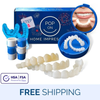






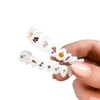
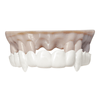

Device Description: The Pop On Custom Mouthguard is a custom-made Mouthguard.
Indication for Use: The Pop On Mouthguard is indicated for protection of teeth and restorations against grinding and clenching, and as an aid in the reduction of medically diagnosed migraine pain associated with jaw clenching and bruxing.
Caution: If you experience pain or discomfort in your jaw joints, begin having increased headaches or any of your teeth become tender to chew on, discontinue use of your guard, contact POPONSMILES LLC customer service, and contact a dentist for a consultation.
Warning: If you have an allergic reaction, please discontinue use immediately, contact POPONSMILES LLC customer service, and contact a dentist for a consultation.
Contraindications:
-
Patients with poor oral hygiene
-
Patients with active periodontal disease or loose/mobile teeth
-
Patients with temporary restorations (e.g., crowns, bridges)
-
Patients undergoing orthodontic treatment (e.g., braces, aligners, retainers)
Precautions:
-
Pop On Mouthguards are non-sterile.
-
Accidental swallowing of Mouthguards may be harmful.
-
Clean the Pop On Mouthguard as instructed.
-
Keep your Mouthguard away from children and pets.
-
Do not eat or drink (except water) with your Mouthguard in.
-
Keep your Mouthguard out of excessive heat.
-
Brush and floss your teeth prior to use to prevent trapping food and bacteria on your teeth.
Complications: Pop On Mouthguards can cause side effects; however, these side effects occur in a small number of people. Your dentist can monitor you for them. These side effects include:
-
Oral/Tooth Pain
-
Oral Discomfort
-
Oral Tissue Damage (gingival and mucosal sores or lacerations)
-
Indirect/Direct Restoration Removal (crowns, bridges, fillings)
-
Nerve Damage (oral numbness)
-
Periodontal Disease (loose tooth)
-
Injury from Mouthguard
-
Ingestion of Mouthguard
-
Temporomandibular Joint Dysfunction (joint pain)
-
Occlusal Adjustment
-
General Health Problems
-
Allergic Reaction
-
Complications due to the use of tobacco products
-
Blanching (white pressure spot) in the gingiva
-
Sharp edges on the Mouthguard
-
Oral Mucosal Redness
-
Oral/facial Swelling
-
Mouthguard will not seat smoothly or difficult getting in place
-
Difficult to remove
-
Tooth malalignment
-
Tongue Irritation
-
Mouthguard doesn't allow user to close their mouth (locked jaw)
-
Muscle soreness in cheeks, lips or temporal area
-
Headaches
-
Difficulty in Breathing
-
Tightness of Mouthguard
If any of the complications mentioned above do occur, discontinue use of Pop On Mouthguard immediately and contact a dentist for an evaluation and treatment.
Recommended Procedure:
The Pop On Mouthguard requires that impressions or 3D scans are obtained. You have a couple of options for how you submit this to Pop On:
-
You may get dental impressions prescribed by a treating dentist after expressing interest in a Pop On Mouthguard.
-
You may get a 3D scan done by a treating dentist after expressing interest in a Pop On Mouthguard.
-
You may use a 3D scan from a treating dentist/orthodontist from a previous alternative device or therapy such as a clear retainer and the patient expresses interest to the treating dentist/orthodontist.
Submit your impression taken from the prescribing dentist within 1 week from the impression taken, as the impression may distort after 1 week of being taken. Note, if any restorative work (fillings, crowns, bridges, etc.) is done since last impression, new impressions should be taken; otherwise, the Mouthguard may not fit your dentition.
Note: Keep the impressions in normal room temperature (20-25 degrees Celsius).
Any 3D digital scans should be current, that is taken by a dental healthcare professional within the last month. Note, if any restorative work (fillings, crowns, bridges, etc.) is done since the last scan, a new scan should be taken; otherwise, the Mouthguard may not fit your dentition.
You can choose the thickness within the online portal when placing your order. The Pop On Mouthguard is available in different thickness options to meet individual needs.
-
Thinner guards (1.0–1.5 mm): Designed for users with light to moderate grinding or clenching. These guards provide comfort and ease of adaptation while still protecting teeth and restorations.
-
Thicker guards (2.0–3.0 mm): Recommended for users with heavy grinding or clenching. These guards provide increased durability and resistance to wear but may feel bulkier in the mouth.
The choice of thickness affects both comfort and protection. Thinner guards are easier to wear, but heavier grinders may wear through them more quickly. Thicker guards are stronger but may require a short adjustment period. If you are uncertain which thickness is appropriate, consult with your dentist before selecting.
Once you receive your Mouthguard:
-
Open your packaging and inspect the Mouthguard – do not use it if it appears damaged.
-
Insert your Mouthguard before bedtime
-
Wear the Mouthguard throughout the night
-
Remove the Mouthguard in the morning.
-
Clean the Mouthguard by rinsing with lukewarm water to wash away any saliva and plaque buildup. You may also use a clean soft-bristled toothbrush to gently scrub the surfaces. If you want a bit more thorough cleaning, you can use a mild liquid dish soap. Avoid abrasive cleaners like toothpaste as they may scratch the surface of the Mouthguard.
-
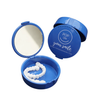
Place the Mouthguard in its case in a safe location.
Note: Users of Pop On Mouthguards should visit a dentist for dental examination if any issues arise or for regular checkups every 6 months.
Period of Use/Storage:
-
It is recommended to replace the Mouthguard every 3-6 months to prevent the buildup of dental plaque that may affect your dental health.
-
Store Mouthguard in provided case when not in use.